What do you Think a Farmer Looks Like?
Throughout a normal year I find myself talking to various groups of children whether guests on the campsite or classes of children. I wouldn’t call myself a natural by any means but with children it is all about keeping it simple.
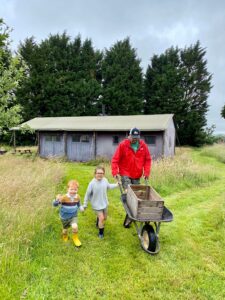
To break the ice my first question is normally ‘What do YOU think a farmer looks like?’
This normally gets a good response with a good number of hands shooting into the air. Interestingly the answers are always the same – “really old”, “he wears a straw hat”, “always wears wellies”, “grumpy”, “checked shirt”, and my personal favourite, “hairy chest”. And whilst it should be noted that in many cases, they’re quite close to the mark with those descriptions (I confess to owning a few check shirts), it doesn’t really portray the way that we like to see ourselves as part of a modern dynamic and increasingly diverse agricultural industry.
But leaving aside the work we need to do in changing children’s perceptions of us, their answers do often lead me to ponder what the role of a 21st century farmer really is, and whether we’re in the midst of an identity crisis. My father who was born during the war in an era when the British public were still experiencing rationing has always known his role with absolute certainty – to produce as much food as he can, as efficiently as possible. This he has done successfully for his entire farming career, whilst been backed up by Government.
For most of my career, having been taught to farm in that way both at home and college and on other farms, I thought that was my role too. Why would I question it. In the UK we have the climate, the infrastructure, the technology and the expertise which many other countries do not have so we should be pushing on to produce as much as possible to feed ourselves and export any surplus. A simple business decision.
Now being older and hopefully wiser I have questioned whether I was right to follow this path and what is my role from here? You cannot turn back the clock, but what is the role of today’s farmer? Obviously it is to run a profitable business but we must also leave the land in better condition than we found it, and all this while making a positive contribution to reducing climate change.
All three of these aspirations require long term thinking and solutions, from individual farming families, from the wider agricultural industry, and perhaps most crucially of all, from policy makers. Because if we want those things, if we really value our rural communities and our planet and to help them survive and thrive, then we need to look at what’s working and what isn’t, seriously address the barriers we’re facing, and realise the grave consequences of both inaction and getting it wrong.