Manor Farm, Alton, Hants GU34 3BD
21 Nov 2025

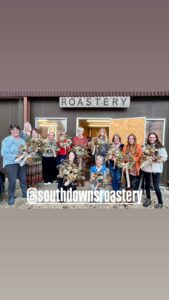
Wreath making workshop at Manor Farm with Blooming Cow Flowers.

Photo from the very successful Autumn wreath making.

There are just a handful of Christmas wreath workshop tickets left… Friday 5th of December from 6.30pm at South Downs Roastery. £45pp link here: https://bloomingcowflowers.co.uk/workshops-%26-events

06 Nov 2025

When Communication Breaks Down: The Human Side of Farm Diversification

Across the countryside, many farms are adapting to survive. Declining farmgate prices, rising input costs, and uncertainty around agricultural policy have forced farmers to seek new ways to sustain their livelihoods. From holiday lets and cafés to renewable energy and events, diversification has become a lifeline for rural businesses.

But while diversification can breathe new life into farms, it can also strain the delicate relationship between farmers and their neighbours. In some communities, trust has broken down—not because of the projects themselves, but because of how they were introduced and communicated.

A Breakdown of Trust

In many rural areas, long-standing relationships between farmers and locals are built on mutual respect and familiarity. However, when a diversification plan is launched without early consultation—perhaps a campsite, a wedding venue, or a new access road—locals can feel excluded, surprised, or even threatened by the changes.

What might seem like a reasonable business move to a farmer can appear, from the village’s perspective, as something imposed rather than shared. Rumours spread quickly, concerns go unaddressed, and before long, suspicion replaces support.

In such situations, even well-intentioned projects can become symbols of division rather than progress.

The Farmer’s Dilemma

It’s important to remember that most farmers who diversify do so under pressure. Farming is a vocation, but also a business. Margins are tight, and climate, policy, and markets are unpredictable. Many farmers feel they have little choice but to innovate—and fast.

However, when livelihoods are at stake, communication sometimes takes a back seat. The focus is on securing planning permission or funding, not community engagement. Yet skipping that step often proves costly later, when opposition arises and trust erodes.

Rebuilding Bridges

Rebuilding community trust takes time and openness. Listening sessions, farm open days, or public meetings can help locals understand why diversification is necessary and how it can benefit everyone.

Transparency about intentions—whether it’s environmental commitments, noise management, or local job creation—shows respect for the people who share the landscape. Simple steps, like inviting feedback early or offering clear updates, can transform suspicion into collaboration.

Farmers and communities ultimately want the same thing: a thriving countryside that supports both livelihoods and quality of life.

Looking Ahead

Diversification is not just an economic strategy—it’s a social one. Success depends not only on business plans, but on empathy and dialogue. When farmers and rural communities work together, diversification can become a source of shared pride rather than division.

At its best, it’s not about changing the countryside—it’s about keeping it alive, in a way that everyone can feel part of.

03 Oct 2025

Why Supporting UK Farmers Matters for All of Us.

When we shop for food, it can be tempting to go for what is cheapest and most convenient. But behind every pint of milk, loaf of bread, or bag of carrots is the work of farmers. In the UK, they face increasing pressures — from rising costs and unpredictable weather to competition with imported produce.

This raises an important question: should we be looking after UK farmers? The answer is yes — because the food they produce isn’t just about filling our plates, it’s about safeguarding the nation’s health.

Nutritious food underpins our wellbeing. Diets rich in fresh fruit, vegetables, grains, dairy and meat contribute to lower rates of obesity, diabetes, and heart disease, while also helping children to grow and learn well. If we neglect home-grown produce and instead rely heavily on imported or processed food, the long-term costs to the NHS and society will only increase.

Supporting British farmers also means supporting high standards. UK farmers are bound by strict rules on food safety, animal welfare, and environmental care — standards not always matched abroad. When we choose local produce, we are choosing food we can trust.

There are economic benefits too. Farming sustains rural communities, provides jobs, and keeps money circulating in the local economy. A resilient farming sector also strengthens food security — reducing our dependence on global supply chains that can be disrupted by conflict, climate change, or pandemics.

The conclusion is clear: when farmers thrive, we all thrive. By backing UK agriculture — whether by buying local produce, supporting farmers’ markets, or recognising the value of paying a fair price for quality food — we are investing not just in farming, but in healthier lives, stronger communities, and a more secure future.

08 Oct 2023

Farming Jargon

We have been inviting guests on to the farm for over 17yrs now. While it is always a pleasure to spread the word on what we do and how we do it, it occurred to me recently while giving a talk to the WI that farming language is changing. Here are a few of the more commonly used terms and a brief explanation.

Agroecology – Ecology is the study of relationships between plants,animals,and the environment. Agroecology applies ecological concepts to farming, an increasingly important area, whether that’s mitigating climate change by reducing emissions or working with wildlife.

Agroforestry – A practice combining trees and farming either with grazing livestock (silvo pasture) or crops(silvoarable). Benefits include protection from the elements, increased soil carbon levels and greater biodiversity.

Biodiversity – Different kinds of life found in one place- animals, plants, fungi and those not visible to the naked eye, such as microorganisms. They work together in ecosystems, providing clean air and water, food, shelter and medicines.

Carbon Capture – This is high on the agenda, as adopting practices such as planting cover crops, minimum tillage or agroforestry means soils can absorb greenhouse gases rather than emit them. Soil holds three times as much carbon as the atmosphere.

Cover Crops – Non-cash crops, sometimes grazed by livestock, such as mustards, clovers or oats, grown to protect otherwise bare soil from erosion and add organic matter in between regular crop production.

Crop rotations – Planting different crops sequentially on the same plot over a number of years, then repeating to improve soil health and interrupt pests and diseases. In mixed rotations livestock graze, enriching soil with their manure, as is the case at Manor Farm where we have a 7yr rotation.

Fertiliser – Conventional farmers rely on synthetic nitrogen fertiliser to grow crops and grass, but it’s made using fossil fuel, and prices rose 78% between March 2019-23. Natural sources include legumes and farmyard manure, which replenishes soils with nitrogen, phosphorus and potassium.

Herbal Leys – Temporary grasslands of legumes, herbs and grasses, farmed as part of a mixed or arable rotation. They improve soil structure, build organic matter and have a wider variety of species, providing food for pollinators.

Intercropping – Growing different crops in close proximity-such as wheat with beans or linseed with oats-for beneficial interactions. This can increase yields by reducing weeds, and plants complement each other because they use available nutrients at different times.

Living mulches – Low-lying plants such as clover grow in a cash crop as a ‘living mulch’, remaining after harvest. They fix nitrogen, build soil fertility and allow livestock to graze straightaway.

Minimum or no-till – This means cultivating soil no deeper than 15cm and not ploughing. It has gained popularity in recent years to improve soil health, although it can mean increased reliance on herbicides to control weeds.

Mob grazing – A growing trend, this is short duration, high density grazing with a longer than usual grass recovery period. Farmers might move livestock onto fresh pasture once a day and leave the grass to recover for 40 to 100 days, improving soil structure. Rule of thumb is the length of grass above the ground is the same as the root length below the ground.

Regenerative agriculture – This growing trend is about producing food while improving the environment. Practices include minimum disturbance of soil and incorporating diversity, whether that’s through rotations, livestock or intercropping.

Soil microbiology – A quarter of all species on Earth live in soils and it’s increasingly recognised life below ground requires the same level of attention as biodiversity above it. Regenerative, organic and agroecological farming methods all focus on soil microbiology and health.

The great news is these terms are common practice amongst farms now, so on your walks take a look, because you now know what you are looking at.

27 Sep 2021

Clarkson’s Farm, Trade Deals and Carbon Trading

Inspiration our news page come in many shapes and forms. It may be the time of year, the  weather, the future or quite often a question from one of our guests. We have had a busy summer on the campsite and although restricted somewhat by Covid in our interactions there have been lots of questions. A lot is happening in the agricultural world and a lot of it in the public eye.

Thanks to Mr.Clarkson (Clarkson’s Farm on Amazon) the realities of managing a working farm have been brought to a new audience and you’d be hard pushed to find a farmer who didn’t relate to most of the trials Jeremy put himself through. Our guests were very disappointed I didn’t own a Lamborghini and I don’t have a Caleb telling me how to do it. Yes at times there was creative licence but Clarkson did try and portray what most farmers face and was open to the fact that as much as he enjoyed it ,if he didn’t have his extra income from his day job, things would be very tough. This allied to a recent comment I saw “A farm isn’t just a farmer’s workplace, it is his heart and soul”.

Many of the guests had read the reports on recent trade deals with Australia and while at present I do not feel too threatened by them, the precedent set will open the flood gates for other deals that could undermine British Agriculture completely. I appreciate deals like this could work both ways but farming in this country has many more hurdles to jump through that our Australian counterparts don’t, and this is without even touching on their advantages of scale. I’m sure this topic will crop up in future articles, but it is undermining British farmer’s confidence and their willingness to invest in their farming enterprises.

One topic that kept cropping up was carbon trading or offsetting. A few of our guests asked me whether I see our future on the farm as primarily being food producers or will we be sequestering carbon for those industries unable too? Thus offsetting their impact i.e the airline industry. Whilst I am by no means an expert on this subject I think it has along way to go before income is derided from the way I farm, rather than what I produce. We are already someway into our journey of farming in a more sympathetic way and now have an idea of our biodiversity gains but at present this is because I think it is right and the way I like to farm. Whether I will be able to make a living out of it remains to be seen. It was pointed out to me the other day that sequestering carbon will only really slow climate change so if we want to stop it or even reverse it we have to change the way we live or reduce the need to offset it, something for us all to think about.

For those wanting a good read on farming I thoroughly recommend Field Work: What land does to people and what people do to land, by Bella Bathurst.

23 Nov 2020

Will’s First Virtual Farm Tour For a School.

It’s good to talk about the technology available in the farming industry and whether a farmer of a certain age has the skills to cope with it. I for one fit that category and although it makes me nervous I am keen to embrace it and excited that it could take our industry into new and exciting times.

Last month I had the pleasure in delivering a lecture outlining my business to a group of year ten students in Cumbria. This you may wonder is a departure from my day job but is an example of technology in use.

Farming as an industry has an alarming problem in that its core work force has an average age of 56 yrs old. I luckily fall below that, just, but if we are going to embrace this new technology we must have an industry attractive for generations to come.

Over my farming career the industry has reduced its workforce drastically. Efficiencies have made us competitive and helped bring down the price of food. The cost of land makes it very difficult for new entrants and a lot of the roles on a farm are regarded as menial and low paid.

I have over the years been very open with our farm. In the early years we were proactive in giving farm walks to our customers from our butcher’s shop in Alton, primarily to give them the confidence to buy a genuine product but also to help them understand the process.

With our glamping site we show over a thousand people a year around the farm primarily to get them to appreciate their surroundings but also to send them away with a confidence to buy British.

Over the years I had hoped that some of my younger audience will have been inspired to think of Agriculture as a career as the industry cannot rely on a bunch of fifty year olds. This brings me back to my venture into lecturing.

Last Autumn I approached an organisation called LEAF(Linking Environment and Farming ) about linking up with local schools. LEAF has recently merged with FACE(Farming and Countryside Education).The primary goal is to inspire and educate future generations about farming, food and the countryside. Working with a regional consultant the aim was to link up with local schools and hopefully deliver a series of inspiring farm visits.

Sadly we haven’t been able to deliver yet but Jo my regional consultant has been proactive on Facebook and promoted the idea of doing this remotely and I as a willing volunteer, offered to do the first one. The process is remarkably simple and involved two people, a selfie stick  ,a willing group of students and of course well behaved animals. We finished with a question and answer session which was a bit like being thrown to the dogs but I survived and will be better prepared next time.

Ultimately my point to this article is that with the industry changing and embracing new technology hopefully we will be an attractive career choice to the next generation and I for one am keen to inspire them.

Further reading

www.leafuk.org/education