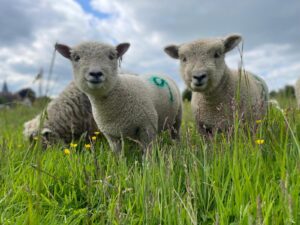
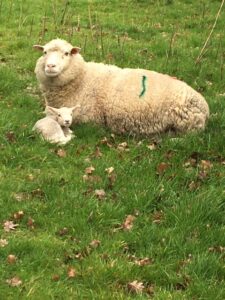
Lambing Time Over For Another Year.
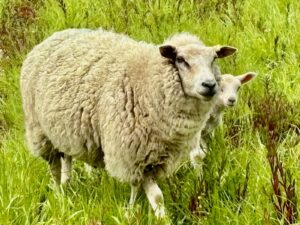
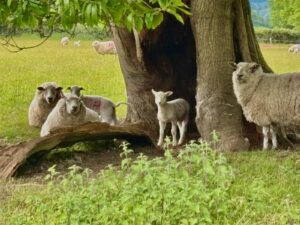
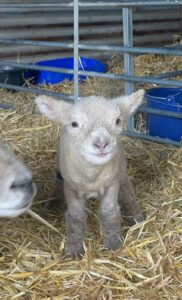
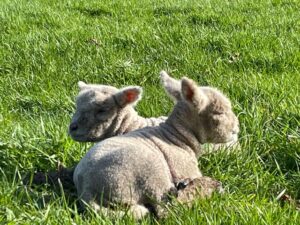
626 lambs arrived safely, all scampering around in the fields with their Mums.
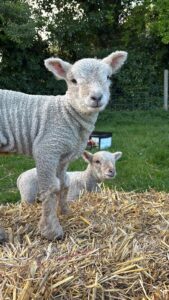
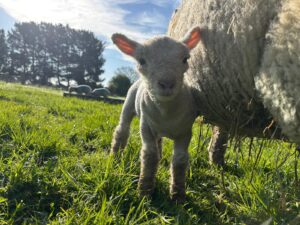

626 lambs arrived safely, all scampering around in the fields with their Mums.
At the recent NFU conference, the theme was “Stronger Together”, reflecting the turmoil facing today’s agricultural industry. Rising costs, falling margins, changing policies and unpredictable weather have left many farmers feeling under pressure. While this moment feels new to us, history shows that agriculture has faced deep crises before — and that cooperation has often been the response.
My own family story connects directly to one of those periods. My great-grandfather came to this parish in 1886, right in the middle of what became known as the Great Agricultural Depression. British farming at that time was under enormous strain. Cheap grain was arriving in large quantities from North America, made possible by new railways and steamships. Wheat prices collapsed, rents fell, and many farms that had been profitable for generations suddenly struggled to survive.
Across the country, arable land was abandoned or turned into grass, and rural labourers left for the towns in search of work. Villages changed, populations declined, and farming families had to adapt quickly or fail. When my great-grandfather arrived here, he would have found an industry in difficulty, with uncertainty about prices, employment and the future.
It was in this atmosphere of hardship and insecurity that farmers began to organise more effectively. In 1908, the National Farmers’ Union was founded to give farmers a united voice at a time when many felt powerless in the face of falling prices and rising competition from abroad. The idea was simple but powerful: farmers would be stronger if they spoke together rather than individually.
The depression of the late nineteenth century lasted for nearly twenty years and permanently reshaped British agriculture. The countryside we recognise today — with its emphasis on livestock and mixed farming rather than vast areas of wheat — is in part a legacy of that painful adjustment. Institutions such as the NFU grew out of that experience, helping to shape agricultural policy and defend farmers’ interests through later crises.
A second major downturn followed the First World War. During the war, farmers had been encouraged to increase production, supported by government price guarantees. When peace came, those guarantees were withdrawn almost overnight. Prices fell sharply while costs remained high, and farming entered a slump before the rest of the economy. By the time the wider Great Depression arrived in the early 1930s, agriculture was already struggling.
Again, collective action mattered. Governments introduced protectionist measures, marketing boards and subsidies, and farming organisations worked to stabilise prices and supplies. These policies eventually laid the foundations for the post-war farming system that prioritised food security and steady production.
Today’s challenges are different in detail but familiar in shape. Farmers now face rising input costs, volatile markets, changing support systems, environmental pressures and the growing impact of climate change. Once again, the rules of the game are shifting at the same time as margins are tightening.
History suggests that such moments do not simply pass; they reshape farming. Just as earlier depressions led to new systems, new policies and new institutions, today’s pressures may push agriculture towards environmental stewardship, new technologies and different business models.
There is also a deeper lesson. Farming has never come through hard times alone. Past crises strengthened unions, cooperatives and local networks. The message “stronger together” is not a modern invention — it is how farming has survived every previous upheaval.
For those of us who do not farm, this history is a reminder that agriculture is not just an industry but part of the life of our villages and parishes. When farming suffers, rural communities feel it too. Supporting farming is about sustaining the countryside, the food system and the shared landscape we all depend on.
When my great-grandfather arrived here in 1886, farming was in depression. Yet families stayed, adapted and carried on. Out of those hard years came organisations like the NFU and the farming systems that shaped the twentieth century. As we face another period of uncertainty, the past reminds us that agriculture has weathered great storms before — and that it does so best when farmers and communities stand together.
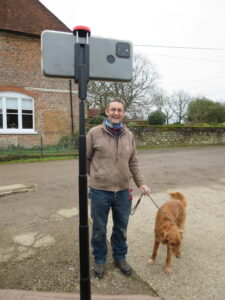
Beautifully organised as usual by Jo Hatton of LEAF (Linking Environment and Farming). Will has just done another full day of tours. Schools/colleges from all round the UK. Will walks with a a selfie stick from the main yard where he talks about our cluster of industrial units, to the cows and sheep and the campsite. Loads of great questions including the usual ‘Is farming hard work’? Well what isn’t?
There is a lot happening in the agricultural world at present, prompting almost daily articles in the press. I, like many farmers forget who I am talking to sometimes and often use jargon when discussing a certain topic. This theme was prompted by a discussion with one of my work experience students who asked what ‘Natural Capital’ was.
Natural Capital is a way of viewing the environment as a set of assets that benefit wider society, rather than any single individual or organisation. A good example can be seen on a dairy farm where changes to how they manage their on-farm slurry can improve groundwater quality. This in turn benefits water companies and the general population, not just the farm itself where the improvements take place.
It is difficult to put a value on the work done and the public goods generated by improving natural capital. This challenge makes natural capital difficult to understand in a farm business setting. Speaking from personal experience this makes it harder to justify investing in natural capital rather than other parts of the business. As a result of this, farmers have often been blamed for putting output and productivity first at the expense of the environment.
So where are we today. Natural capital is now the cornerstone of Government policy, incentivising farmers to increase or enhance natural capital. For farmers, it is important we realise there are two elements to natural capital. On one hand we have the hedgerows, trees, soil and biodiversity on the farm which we call the natural capital stock and on the other the ecosystem services, or operational bit which includes the carbon sequestration which our stock provides.
At Manor Farm we have been part of the Countryside Stewardship scheme for 20 years. This alone has helped us to increase and enhance what effectively used to be regarded as ‘free’ by nature and taken for granted. Now with the collaboration of neighbouring farmers we are doing this on landscape scale.
We are in the process of measuring our carbon footprint, this will help us understand where investment can be targeted to improve productivity in a sustainable way, as well as highlighting areas that may provide value to third parties in the form of carbon credits.
On any farm soil and water are vital assets or we don’t have a business. Both these assets have a value for the wider public because they are the foundations for wholesome food and clean drinking water, in the face of climate change both soil and water have to be managed even more carefully. As a result of this we have implemented crop rotations that reflect this. Thames Water are now collaborators with us in this goal further emphasising the bigger scale of our ambitions.
For most of you who own dogs one of life’s little pleasures at present is the excuse to go for a dog walk and this pleasure hasn’t been wasted on a growing number during the pandemic. The boon in dog sales over the past year has seen more of us take on the responsibility of owning man’s best friend.
Rural areas have seen a huge increase in dog walkers and fundamentally this is to be welcomed but sadly it hasn’t all been plain walking. New statistics from rural insurers show that in 2020, the UK cost of dog attacks on livestock reached an estimated £1.3m – an overall increase of over 10%.
In our locality the incidents are fortunately few and far between. This could be due to the lack of livestock or the fact we have very responsible owners. In a recent survey of dog owners commissioned by NFU Mutual it was revealed that 64% are letting their pets roam free in the countryside, despite half of these owners admitting their dog doesn’t always come back when called.
Attacks are one thing but the damage caused from chasing of sheep at this time of year can have catastrophic consequences on the number of lambs born alive. Also evident in the report was that rather alarmingly, only 40% of the dog owners surveyed accepted that their pet could cause the injury or death of a farm animal only 33% saying they would report an attack taking place to police or a local farmer.
Historically the onus has been on countryside users to follow the countryside code but statistics show this is having little effect and there is now a movement to change the law meaning prosecutions and fines will be given to offenders. This is sad but so is the unbearable suffering of the animal, the anxiety caused to farmers and their families and lest we forget to the dog owners themselves on losing their dog.
As a livestock farmer I have always resisted plastering the countryside in signs hoping it is more welcoming and in fact most of the signs seen locally are more likely politely requesting you to keep off a grass margin. This brings me to gently remind everybody that as spring arrives, please do not forget our hedge line livestock as they too at this crucial time of year, do not respond well to a bit of dog worrying.
All being well we hope to open the campsite for business in early July. Meanwhile this little family has taken up residence in one of our outdoor showers. (Photo taken safely when Mummy bird nipped out for food).