Farming Jargon
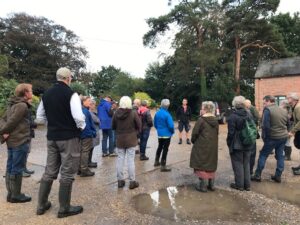
We have been inviting guests on to the farm for over 17yrs now. While it is always a pleasure to spread the word on what we do and how we do it, it occurred to me recently while giving a talk to the WI that farming language is changing. Here are a few of the more commonly used terms and a brief explanation.
Agroecology – Ecology is the study of relationships between plants,animals,and the environment. Agroecology applies ecological concepts to farming, an increasingly important area, whether that’s mitigating climate change by reducing emissions or working with wildlife.
Agroforestry – A practice combining trees and farming either with grazing livestock (silvo pasture) or crops(silvoarable). Benefits include protection from the elements, increased soil carbon levels and greater biodiversity.
Biodiversity – Different kinds of life found in one place- animals, plants, fungi and those not visible to the naked eye, such as microorganisms. They work together in ecosystems, providing clean air and water, food, shelter and medicines.
Carbon Capture – This is high on the agenda, as adopting practices such as planting cover crops, minimum tillage or agroforestry means soils can absorb greenhouse gases rather than emit them. Soil holds three times as much carbon as the atmosphere.
Cover Crops – Non-cash crops, sometimes grazed by livestock, such as mustards, clovers or oats, grown to protect otherwise bare soil from erosion and add organic matter in between regular crop production.
Crop rotations – Planting different crops sequentially on the same plot over a number of years, then repeating to improve soil health and interrupt pests and diseases. In mixed rotations livestock graze, enriching soil with their manure, as is the case at Manor Farm where we have a 7yr rotation.
Fertiliser – Conventional farmers rely on synthetic nitrogen fertiliser to grow crops and grass, but it’s made using fossil fuel, and prices rose 78% between March 2019-23. Natural sources include legumes and farmyard manure, which replenishes soils with nitrogen, phosphorus and potassium.
Herbal Leys – Temporary grasslands of legumes, herbs and grasses, farmed as part of a mixed or arable rotation. They improve soil structure, build organic matter and have a wider variety of species, providing food for pollinators.
Intercropping – Growing different crops in close proximity-such as wheat with beans or linseed with oats-for beneficial interactions. This can increase yields by reducing weeds, and plants complement each other because they use available nutrients at different times.
Living mulches – Low-lying plants such as clover grow in a cash crop as a ‘living mulch’, remaining after harvest. They fix nitrogen, build soil fertility and allow livestock to graze straightaway.
Minimum or no-till – This means cultivating soil no deeper than 15cm and not ploughing. It has gained popularity in recent years to improve soil health, although it can mean increased reliance on herbicides to control weeds.
Mob grazing – A growing trend, this is short duration, high density grazing with a longer than usual grass recovery period. Farmers might move livestock onto fresh pasture once a day and leave the grass to recover for 40 to 100 days, improving soil structure. Rule of thumb is the length of grass above the ground is the same as the root length below the ground.
Regenerative agriculture – This growing trend is about producing food while improving the environment. Practices include minimum disturbance of soil and incorporating diversity, whether that’s through rotations, livestock or intercropping.
Soil microbiology – A quarter of all species on Earth live in soils and it’s increasingly recognised life below ground requires the same level of attention as biodiversity above it. Regenerative, organic and agroecological farming methods all focus on soil microbiology and health.
The great news is these terms are common practice amongst farms now, so on your walks take a look, because you now know what you are looking at.